3d Rendered Eggplant for Design Project: A Versatile Resource for Creative Professionals
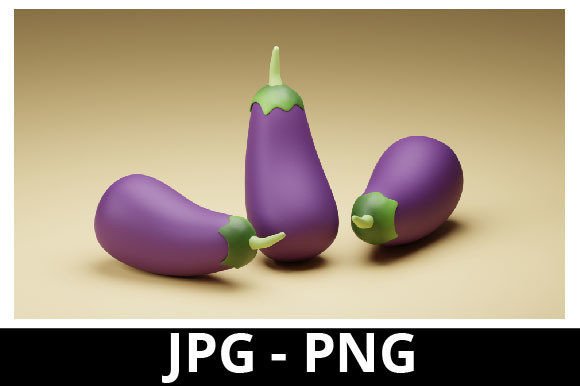
The 3d Rendered Eggplant for Design Project is a digital asset that offers high-quality visual representations of eggplants, ideal for use in graphic design, marketing materials, and digital art. These rendered images come in various formats, including JPG and PNG, with options for isolated or grouped eggplants. The 3d render captures the natural texture, color, and shape of the vegetable, making it a valuable tool for designers seeking realistic visuals without the need for physical photography.
Unlike traditional photographs, 3d renders allow for greater flexibility in editing and customization. Designers can adjust lighting, background, and perspective to suit their project's needs. This adaptability makes the 3d Rendered Eggplant for Design Project a practical choice for those working on branding, packaging, or editorial content.
What Makes 3d Rendered Eggplant Unique?
One of the key features of the 3d Rendered Eggplant for Design Project is its ability to provide consistent quality across different applications. Whether used in a food-related advertisement, a health-focused infographic, or a lifestyle magazine, the rendered eggplant maintains its visual integrity. This consistency is especially beneficial when multiple assets are needed for a cohesive design scheme.
The 3d render also ensures that the eggplant appears fresh and vibrant. With attention to detail in the texture and color, these images reflect the natural characteristics of a real eggplant, such as its deep purple hue and smooth surface. This level of realism is essential for projects that aim to convey authenticity and quality.
Another advantage of the 3d Rendered Eggplant for Design Project is its versatility in format. The ZIP folder typically includes both JPG and PNG files, allowing designers to choose the best option for their specific needs. PNGs offer transparent backgrounds, which are useful for isolating the eggplant from its surroundings, while JPGs provide a more compact file size for web use.
Comparing 3d Rendered Eggplant with Other Options
When compared to traditional photography, 3d renders offer several benefits. While a photograph can capture the essence of a real eggplant, it may be limited by factors such as lighting, background, and camera angle. In contrast, 3d renders allow for complete control over these elements, ensuring that the final image meets the designer’s vision.
For example, if a designer needs an eggplant in a specific pose or against a custom background, a 3d render provides the necessary flexibility. Photographs, on the other hand, may require additional post-processing or even reshoots to achieve the desired outcome. This can save time and resources, particularly in large-scale design projects.
Compared to hand-drawn illustrations, 3d renders offer a more lifelike representation. While illustrations can be stylized and creative, they may not always convey the same level of realism. For projects that require a high degree of accuracy or a natural appearance, 3d renders are often the preferred choice.
However, it's important to note that 3d renders may not be the best option for every situation. For instance, if a designer is looking for a unique artistic style or a more abstract representation, a hand-drawn illustration or a stylized photograph might be more appropriate. The decision ultimately depends on the project’s goals and the designer’s creative preferences.
Best Fit Situations for 3d Rendered Eggplant
The 3d Rendered Eggplant for Design Project is particularly well-suited for projects that require a high level of detail and realism. It is ideal for food-related content, such as recipes, nutrition guides, or restaurant menus, where the visual appeal of the ingredient is crucial. The render’s ability to showcase the eggplant’s texture and color helps to enhance the overall presentation.
This resource is also beneficial for educational or informational materials. For example, a health-focused website might use the 3d render to illustrate the nutritional value of eggplants or their role in a balanced diet. The clear and accurate representation of the vegetable can help to engage viewers and support the message being conveyed.
In addition, the 3d Rendered Eggplant for Design Project is a practical choice for commercial design work. Whether creating packaging for a food product, designing promotional materials, or developing digital assets for a brand, the render provides a reliable and professional-looking image. Its availability in multiple formats ensures that it can be easily integrated into various design workflows.
Limitations and Considerations
While the 3d Rendered Eggplant for Design Project offers many advantages, there are some limitations to consider. One potential drawback is the lack of variation in the original model. Unless the designer has access to multiple versions or customizations, the render may appear repetitive or generic. This could be a concern for projects that require a diverse range of visuals.
Another consideration is the technical expertise required to work with 3d renders. While the ZIP folder typically includes ready-to-use images, some designers may need to modify the files for specific purposes. This could involve using 3d modeling software or graphic design tools, which may add complexity to the workflow.
Additionally, the cost of obtaining high-quality 3d renders can vary depending on the source. Some platforms offer free downloads, while others charge for premium assets. Designers should evaluate the cost-benefit ratio based on their project’s requirements and budget constraints.
When to Choose 3d Rendered Eggplant Over Alternatives
The 3d Rendered Eggplant for Design Project is a strong choice when the goal is to achieve a realistic and consistent visual representation. It is particularly effective for projects that require a high level of detail, such as product packaging, digital marketing campaigns, or educational content. Its flexibility in format and ease of use make it a practical option for many design scenarios.
However, if the project calls for a more artistic or stylized approach, alternative options may be more suitable. For instance, a hand-drawn illustration could add a unique touch to a creative project, while a photograph might better capture the organic feel of a real eggplant. The decision should be based on the specific needs of the project and the desired visual outcome.
Ultimately, the 3d Rendered Eggplant for Design Project is a valuable resource that offers a balance of realism, flexibility, and efficiency. By understanding its strengths and limitations, designers can make informed decisions about when and how to use this asset in their work.