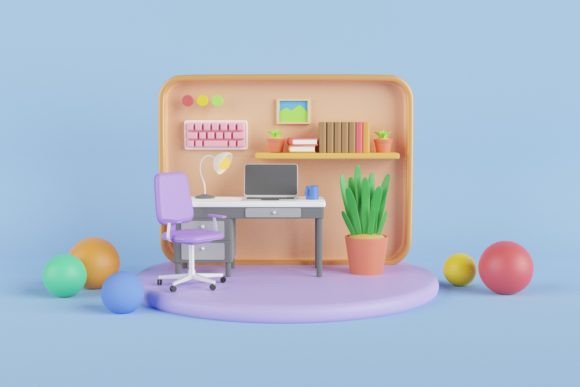
Exploring the Versatility of 3D Conceptual Work Spaces
3D Conceptual Work Spaces offer a dynamic and flexible approach to visualizing ideas, concepts, and designs. These digital environments allow users to create immersive representations that can be manipulated, viewed from multiple angles, and adapted for various applications. Whether you're a designer, developer, educator, or business professional, understanding how to leverage 3D Conceptual Work Spaces can significantly enhance your creative and practical workflows.
The foundation of 3D Conceptual Work Spaces lies in their ability to translate abstract thoughts into tangible visuals. This is particularly useful in fields such as architecture, product design, marketing, and user interface development. By using these spaces, professionals can present complex information in a more digestible and engaging format, making it easier for stakeholders to grasp the intended message.
Key Characteristics of 3D Conceptual Work Spaces
One of the defining features of 3D Conceptual Work Spaces is their scalability. These environments can range from simple models to highly detailed simulations, depending on the needs of the project. They often incorporate elements like lighting, textures, and spatial relationships to create a realistic sense of depth and dimensionality.
Another important characteristic is interactivity. Unlike traditional 2D designs, 3D Conceptual Work Spaces allow users to navigate through the environment, zoom in on specific areas, and even simulate real-world conditions. This level of interaction makes them ideal for testing different scenarios, such as how a product might function in a given space or how a website layout performs across devices.
Additionally, 3D Conceptual Work Spaces support a wide range of file formats, including JPG and PNG. These image files can be used as textures, backgrounds, or reference points within the 3D environment. The flexibility of working with these formats ensures that designers and developers can integrate existing assets seamlessly into their projects.
Practical Applications of 3D Conceptual Work Spaces
The versatility of 3D Conceptual Work Spaces makes them applicable across numerous industries. In the field of marketing, for instance, these spaces are commonly used to create eye-catching banners and promotional materials. By incorporating 3D elements, marketers can produce visually compelling content that stands out in crowded digital spaces.
In web development and UI/UX design, 3D Conceptual Work Spaces help teams visualize how a website will look and function. Designers can use these tools to test layouts, animations, and interactions before implementing them in code. This not only saves time but also reduces the risk of costly redesigns later in the development process.
Educators and researchers also benefit from 3D Conceptual Work Spaces. These environments can be used to create interactive learning modules, virtual tours, or scientific simulations. For example, a biology teacher might use a 3D model to demonstrate the structure of a cell, while a geologist could create a simulation of tectonic plate movement.
Advantages of Using 3D Conceptual Work Spaces
One of the primary advantages of 3D Conceptual Work Spaces is their ability to improve communication. When presenting ideas to clients, colleagues, or stakeholders, a 3D visualization can convey complex concepts more effectively than text or static images. This leads to better alignment and fewer misunderstandings during the planning and execution phases of a project.
Another significant benefit is the potential for cost savings. By creating and testing designs in a 3D environment, businesses can identify and resolve issues before committing to physical prototypes or large-scale production. This reduces waste and minimizes the financial risks associated with experimental projects.
Moreover, 3D Conceptual Work Spaces foster creativity by allowing users to experiment with different styles, colors, and structures. This freedom encourages innovation and helps professionals push the boundaries of what is possible in their respective fields.
Considerations When Working with 3D Conceptual Work Spaces
While 3D Conceptual Work Spaces offer many benefits, they also come with certain challenges. One common issue is the learning curve associated with 3D modeling software. Users may need to invest time in mastering the tools and techniques required to create high-quality work. However, many platforms now offer intuitive interfaces and tutorials to ease this process.
Another consideration is the computational resources needed to run 3D applications. High-resolution models and complex simulations can require powerful hardware, which may be a barrier for some users. Fortunately, cloud-based solutions and optimized rendering techniques have made it easier to work with 3D Conceptual Work Spaces without requiring top-tier equipment.
Finally, it's important to maintain a balance between detail and performance. While adding intricate elements can enhance the visual appeal of a 3D Conceptual Work Space, it can also slow down rendering times and reduce usability. Striking the right balance ensures that the final product remains both functional and aesthetically pleasing.
Integrating 3D Conceptual Work Spaces into Your Workflow
For those looking to incorporate 3D Conceptual Work Spaces into their workflow, the first step is to choose the right tools. There are numerous software options available, ranging from beginner-friendly programs to advanced industry-standard applications. Each tool has its own strengths and limitations, so it's essential to select one that aligns with your specific needs and goals.
Once the tools are in place, the next step is to develop a clear plan for how the 3D Conceptual Work Spaces will be used. This includes defining the scope of the project, identifying key stakeholders, and establishing a timeline for completion. A well-structured approach ensures that the 3D elements contribute meaningfully to the overall objective.
Collaboration is another critical factor when working with 3D Conceptual Work Spaces. Teams should communicate regularly to ensure that everyone is aligned and that the 3D models meet the desired specifications. This can involve sharing files, providing feedback, and making adjustments as needed throughout the project lifecycle.
Future Trends in 3D Conceptual Work Spaces
As technology continues to evolve, the future of 3D Conceptual Work Spaces looks promising. Advances in artificial intelligence and machine learning are already beginning to influence how these environments are created and used. For example, AI-powered tools can generate 3D models based on simple text descriptions, streamlining the design process and reducing the need for manual input.
Additionally, the rise of augmented reality (AR) and virtual reality (VR) is expanding the possibilities for 3D Conceptual Work Spaces. These technologies enable users to experience and interact with 3D environments in new and immersive ways, opening up exciting opportunities for education, entertainment, and commerce.
As these trends continue to shape the landscape, professionals who stay informed and adaptable will be better positioned to take advantage of the latest developments in 3D Conceptual Work Spaces.