3D Rendering of Islamic Decoration
3D rendering of Islamic decoration offers a powerful way to bring intricate and culturally rich designs into the digital world. Whether you're an artist, designer, or business owner, these high-resolution visuals can elevate your projects with stunning detail and authenticity. From ornate geometric patterns to iconic moon and star symbols, 3D renderings provide a modern approach to traditional aesthetics.
Islamic decoration is known for its complexity, symmetry, and spiritual significance. These designs often feature elaborate motifs that are challenging to recreate manually. With 3D rendering, you can achieve precision and consistency while maintaining the essence of the original art. This makes it easier to integrate these elements into various design projects without compromising quality or cultural integrity.
Why 3D Rendering Matters for Design Projects
For professionals in creative fields, 3D rendering of Islamic decoration provides a practical solution to visual storytelling. It allows you to experiment with different styles, colors, and compositions before finalizing a design. This not only saves time but also enhances the overall quality of your work.
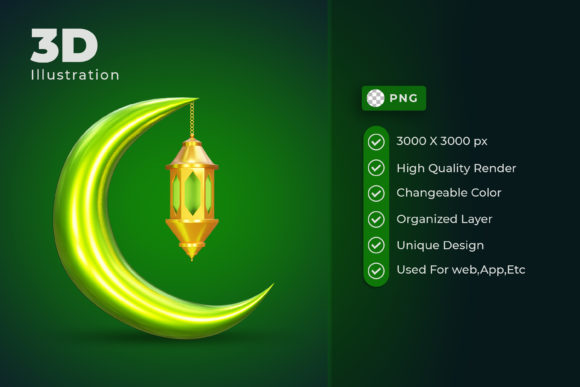
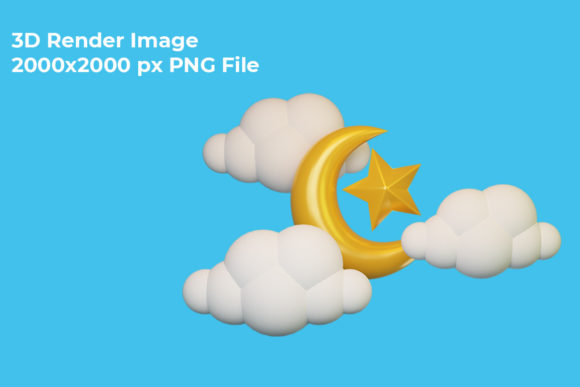
Imagine using a 3D-rendered moon and star icon in a social media campaign for a cultural event or a brand that values tradition. The high-resolution PNG files (2000 x 2000px) ensure that the image remains sharp and clear, no matter the platform. This level of detail can make a significant difference in how your audience perceives your message.
Practical Benefits of Using 3D Islamic Decorations
One of the key advantages of 3D rendering is its versatility. The files you receive—JPG, PNG, and PSD—can be used across multiple platforms, from websites to print materials. This flexibility means you can adapt the same design to different formats without losing quality or detail.
For instance, a graphic designer working on a website for an Islamic cultural center can use the 3D moon and star icon as a header or logo. The high resolution ensures that the image looks professional and polished, even when scaled up. Similarly, a marketer promoting a product with Islamic themes can incorporate these elements into social media posts, banners, or email campaigns with ease.
Enhancing Creativity and Communication
3D renderings open up new possibilities for creativity. They allow designers to explore unique combinations of shapes, textures, and lighting effects that might be difficult to achieve with traditional methods. This can lead to more innovative and visually compelling designs that stand out in a competitive market.
Moreover, 3D Islamic decorations can improve communication by making complex ideas more accessible. When presenting a design concept to clients or stakeholders, having a 3D model can help convey the intended vision more clearly. It reduces misunderstandings and streamlines the approval process, ultimately saving time and resources.
Who Can Benefit Most from 3D Islamic Decorations?
Professionals in various industries can benefit from integrating 3D Islamic decorations into their work. Architects, for example, can use these elements to enhance the visual appeal of buildings inspired by Islamic architecture. Interior designers can incorporate them into space planning to create culturally rich environments.
Entrepreneurs and small business owners looking to promote products with cultural significance can also find value in these renderings. A jewelry designer creating pieces inspired by Islamic art might use the 3D moon and star icon as part of their branding. This not only adds a unique touch but also resonates with customers who appreciate traditional aesthetics.
Realistic Use Cases and Examples
Consider a scenario where a digital marketer is developing a campaign for a travel agency specializing in cultural tours. By using 3D-rendered Islamic decorations, they can create engaging content that highlights the beauty and history of Islamic art. High-quality images can be used in blog posts, social media ads, and email newsletters to attract a targeted audience.
Another example is a teacher or educator preparing a presentation on Islamic culture. Including 3D illustrations of decorative elements can make the lesson more interactive and visually appealing. Students are more likely to engage with content that is both informative and aesthetically pleasing.
Limitations and Considerations
While 3D rendering of Islamic decoration offers many benefits, it's important to consider potential limitations. For instance, the complexity of certain designs may require advanced software and technical skills to manipulate effectively. Users should assess their own capabilities and resources before investing in these assets.
Additionally, it's crucial to respect the cultural and religious significance of Islamic decoration. When using these elements in commercial or public contexts, it's advisable to consult with experts or community members to ensure accuracy and sensitivity. This helps maintain the integrity of the design while avoiding unintended misinterpretations.
Choosing the Right Tools and Resources
To get the most out of 3D Islamic decorations, it's essential to choose the right tools and resources. High-resolution PNG files (2000 x 2000px) are ideal for digital use, but users should also consider the format that best suits their needs. For example, PSD files offer greater flexibility for editing, making them a good choice for designers who want to customize the artwork further.
When selecting a provider, look for those who offer detailed documentation and support. This can help users understand how to use the files effectively and troubleshoot any issues that may arise. Additionally, checking reviews and examples of previous work can give insight into the quality and reliability of the service.
Conclusion: Elevating Design with 3D Islamic Decorations
Incorporating 3D rendering of Islamic decoration into your projects can add depth, authenticity, and visual interest. Whether you're designing for web, social media, or print, these high-resolution assets provide a versatile and effective solution. By leveraging the power of 3D illustrations, you can create designs that resonate with your audience and reflect the beauty of Islamic artistry.